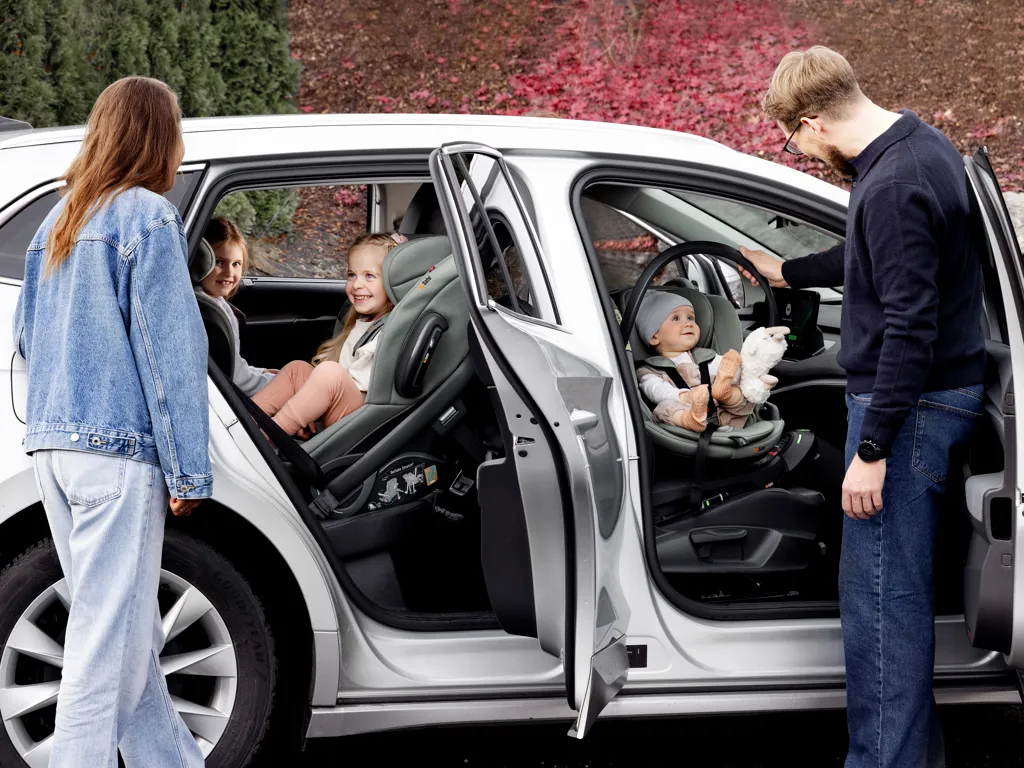
If you've ever wrestled a toddler into a puffy winter coat before a car journey, you'll know the struggle. But here's the thing — that cosy coat could actually be making your child less safe in their car seat. It's one of the most common car seat mistakes parents make, and it's almost entirely avoidable.
Enter the car seat poncho: a simple, clever bit of kit that keeps your child warm without compromising their harness fit. In this guide, we'll explain why coats in car seats are a problem, what a car seat poncho actually is, and how to use one properly.
Why Coats in Car Seats Are Dangerous
It sounds dramatic, but the science is straightforward. When a child wears a thick, padded coat in a car seat, the harness is tightened over all that extra bulk. In a crash, the padding compresses instantly — leaving the harness suddenly much looser than it should be. That slack means the child can move forward significantly before the straps engage, increasing the risk of serious injury.
The two-finger test is the easiest way to understand this: when the harness is correctly fitted over a coat, you can often fit a whole fist underneath the straps once the coat is removed. That gap represents exactly how loose the harness was during the journey.
Safety reminder: This applies to all types of car seats — from infant carriers all the way up to high-back booster seats. If the harness isn't snug against your child's chest and collarbone, it isn't doing its job properly.
This is why extended rear-facing specialists like us are so vocal about coats in car seats. When you've invested in a quality rear-facing car seat and had it properly fitted, it makes sense to use it correctly every single time.
What Is a Car Seat Poncho?
A car seat poncho is designed specifically to work with a harnessed car seat. Unlike a traditional coat, a poncho sits over the harness straps rather than underneath them — so the harness goes directly against your child's body where it belongs, and the poncho keeps them warm from the outside.
Most car seat ponchos are designed with:
- A split or open back so the harness can pass through or sit against the child's body unobstructed
- A generous hood to keep little heads warm
- Fleece or soft-shell fabrics that provide warmth without the dangerous bulk of a padded coat
- A shape that works whether your child is rear-facing or forward-facing
The result is a child who is warm, comfortable, and — crucially — properly restrained.
Are All Ponchos Car Seat Safe?
Not quite. A standard fashion poncho from a clothing retailer isn't automatically safe for use in a car seat. What you're looking for is a poncho that's been specifically designed for car seat use, with an open or split back that allows the harness to sit correctly.
If you're unsure whether a poncho you already own works safely, use the same logic as the coat test: put the poncho on your child, buckle them in, tighten the harness until it's snug, then slide the poncho aside and check the harness position. If it's sitting correctly against their body — not twisted, not bridging across the chest clip, and not loose — you're in good shape.
How to Check Harness Fit with a Poncho On
Getting the harness right is non-negotiable, whatever your child is wearing. Here's a quick checklist to run through every time:
- Put the poncho on first, then buckle your child into the seat
- Tighten the harness so it lies flat against the chest and collarbone — no twists, no slack
- Perform the pinch test: at the collarbone level, try to pinch the harness webbing between your fingers. If you can gather any excess strap, it needs tightening
- Check chest clip position: the chest clip should sit at armpit height — not on the belly, not on the throat
- Arrange the poncho over the top once the harness is set — the bulk of the fabric should fall in front of and behind the straps, not underneath them
Top tip: If you're ever unsure about harness fit — whether you're using a poncho, a thin fleece, or nothing at all — book a check with a trained installer. Our Smalls Install Plus service covers exactly this kind of thing.
Other Warm Layering Options That Are Car Seat Safe
Ponchos are brilliant, but they're not the only solution. Here are a few other approaches that work well:
- Thin fleece layers: A fitted fleece jacket (not padded) adds warmth without meaningful bulk. The key is "fitted" — it should hug the body, not puff out
- Footmuffs: For infant carriers and some combination seats, a footmuff or snuggle bag that attaches to the seat itself is an excellent option, as it sits entirely outside the harness
- Pre-warming the car: Simple, but effective — if you can run the car heater for a few minutes before the journey, your child won't need as many layers
- Blankets over the top: Once the harness is buckled and checked, a blanket over the child is perfectly safe — it's not under the straps
None of these options involve padding between the harness and your child's body, which is exactly the point.
Choosing the Right Car Seat Poncho
When you're shopping for a car seat poncho, here's what to look for:
- Explicit "car seat safe" labelling: Reputable poncho brands designed for this purpose will say so clearly on the product
- Open or split back design: This is the defining feature — the back should allow the harness to sit against your child's body
- Age and size range: Check the manufacturer's guidance; most are designed for toddlers and young children in harnessed seats, but some work for older children in high-back boosters too. If you're trying to decide whether your child is in the right seat for their stage, our Axkid Minikid 4 guide is a useful reference for understanding how extended rear-facing seats fit into the picture
- Ease of use: You want something you can get on and off quickly — especially useful for the school run or nursery drop-off
- Machine washable: Children being children, this one matters more than you might think
If you're looking for recommendations, get in touch with us and we'll point you in the right direction. We're always happy to advise on accessories that complement the seats we stock.
The Bigger Picture: Safe Habits in Every Journey
The coat issue — and the poncho solution — sits within a broader set of habits that make every car journey safer. If you've gone to the effort of choosing an extended rear-facing seat (and the safety evidence strongly supports keeping children rear-facing for as long as possible), it's worth making sure everything else around that seat is working properly too.
That means:
- Checking the harness fit every single journey — not just when you first install the seat
- Not adding aftermarket inserts or padding that didn't come with the seat, unless approved by the manufacturer
- Keeping the seat registered with the manufacturer so you're notified of any recalls
- Getting a proper installation check if you've recently changed cars or moved the seat — and if you're unsure about the best position for your seat in the car, our guide to rear car seat placement is a good place to start
Our Smalls Install Plus service is available for families in Somerset and the surrounding area. If you're further afield and want advice on finding a qualified installer near you, get in touch and we'll do our best to help.
A car seat poncho is a small purchase, but it's one of those things that makes daily life genuinely easier without cutting any corners on safety. And that, honestly, is exactly the kind of thing we love recommending. If you're currently weighing up which harnessed seat to pair a poncho with, our Axkid Movekid review covers one of our favourite options for toddlers and young children.