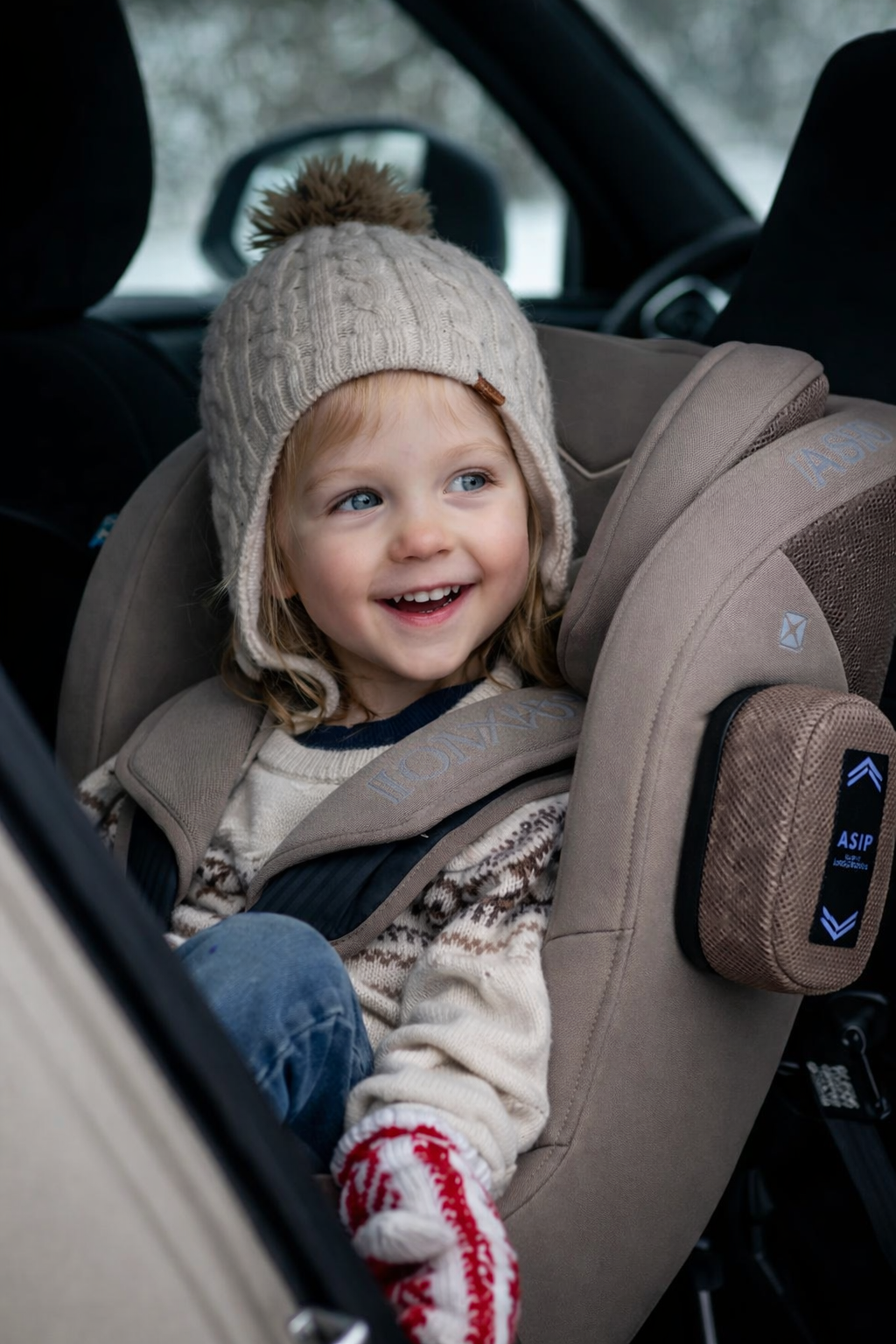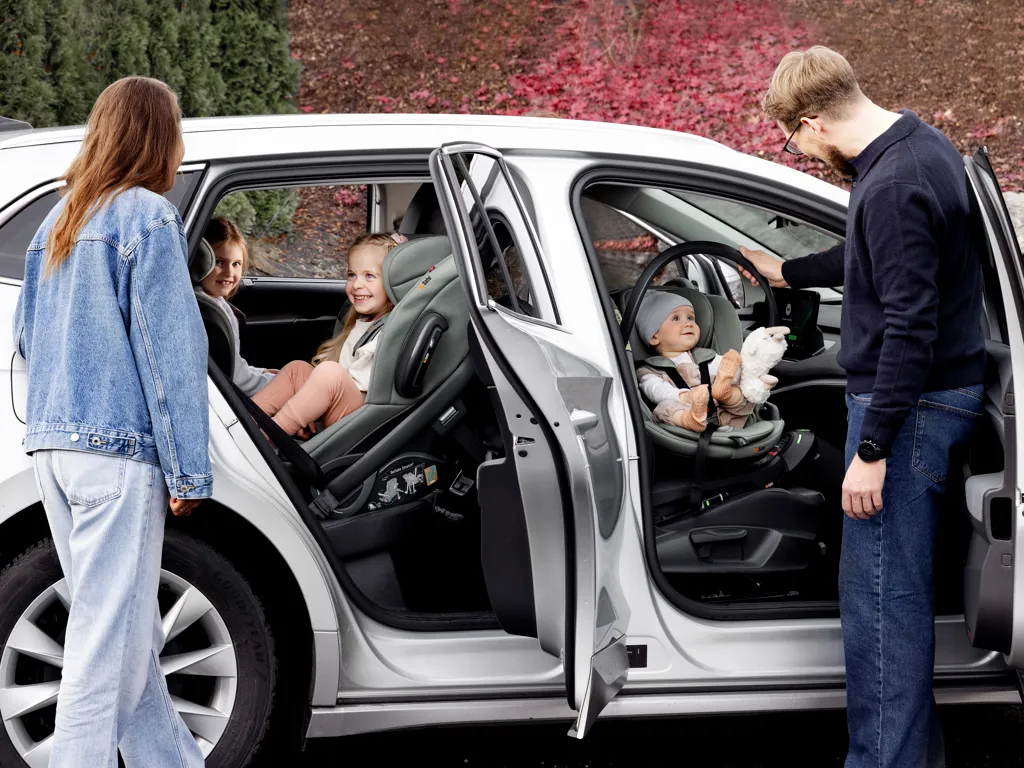

Every week we speak to parents who are confused about the law around rear-facing car seats. Some have been told their child is "too big" to rear-face. Others think they have to switch to forward-facing at a certain age. Most are worried about their child's legs. This guide cuts through the confusion.
What UK Law Actually Requires
In the UK, the law requires all children to use an appropriate child car seat until they are either 12 years old or 135cm tall — whichever comes first. After that, they can use a standard adult seatbelt.
Within that requirement, the law allows either rear-facing or forward-facing seats at any age, provided the seat is approved for the child's weight and height. There is no legal requirement to switch your child to forward-facing at any specific age. The common assumption that children must face forward after 9–15 months is a misreading of the old weight thresholds — not a legal requirement.
The Two Safety Standards: R44 and i-Size (R129)
Car seats sold in the UK must meet one of two safety standards:
ECE R44 — the older standard, based on weight groups. You may still see seats sold as "Group 0+", "Group 1", "Group 2/3" etc. These are R44 seats. They remain legal to buy and use, but the standard has lower requirements for side-impact protection.
i-Size (ECE R129) — the newer standard, based on child height. i-Size seats must offer rear-facing protection to at least 15 months old (in practice most rear-face much longer). i-Size also mandates IsoFix installation and has stricter side-impact test requirements. All new seat models approved after 2023 must meet i-Size.
Both standards are legal. i-Size is newer and has higher side-impact requirements, which is why we stock predominantly i-Size and Swedish Plus tested seats.
Common Myths, Answered
"My child's legs are touching the seat back — they must switch to forward-facing."
This is the single most common misunderstanding we encounter. Children's legs are flexible. Bent knees in a rear-facing seat pose no injury risk. In a crash, the danger is to the head, neck, and spine — all of which are far better protected in a rear-facing seat. The leg position is not a safety issue.
"Rear-facing is only for babies."
Not true. Extended rear-facing seats like the Axkid Minikid 4 rear-face children up to 125cm tall — roughly age 6–7 for many children. The safety benefit of rear-facing exists at every age — it's not just for infants.
"Forward-facing with a harness is just as safe."
Research consistently shows rear-facing is significantly safer for children in forward collisions, which are the most common and most severe type of crash. In a frontal crash, a rear-facing child is cradled by the seat shell; a forward-facing child is thrown against the harness. The physics are clear.
What We Recommend
Our advice is simple: keep your child rear-facing for as long as the seat allows. For most children in an extended rear-facing seat, that means somewhere between age 4 and age 7, depending on their height.
This is not just our opinion — it is the recommendation of the Swedish National Road and Transport Research Institute (VTI), the organisation that developed the Swedish Plus test, and is echoed by road safety organisations across Scandinavia and the UK.
The law sets a minimum. We help you do better than the minimum. If you have questions about which seat to choose or when to switch, get in touch — we're always happy to talk it through.