If you've ever wrestled a toddler into a puffy coat before a school run, you'll know the struggle is real. But here's something that might surprise you: that same coat could be putting your child at risk every time you buckle them into the car.
It's one of the most common car seat mistakes parents make, and it's completely understandable — nobody wants a cold child. That's where the car seat poncho comes in. In this guide, we'll explain the problem with bulky coats, why ponchos are the solution most safety-conscious parents are switching to, and what to look for when choosing one for your child.
Why Winter Coats Are a Problem in Car Seats
This isn't scaremongering — it's physics. When a child wears a thick, padded coat in their car seat, the harness is tightened over all that material. But in a collision, the padding compresses almost instantly. That leaves the harness suddenly much looser than it was when you buckled up, meaning your child could be thrown forward with far less restraint than you intended.
Safety reminder: The pinch test is your best friend. Once your child is buckled, try to pinch the harness webbing at the shoulder. If you can pinch a fold of slack, the harness is too loose — and a coat is usually the culprit.
UK road safety organisations, including the Child Accident Prevention Trust and many car seat specialists, consistently advise against using bulky coats under a harness. This applies whether your child is in a rear-facing seat, a forward-facing seat, or a high-back booster.
For families using extended rear-facing car seats, this matters just as much. The harness geometry on a rear-facing seat is designed to spread crash forces across the strongest parts of your child's body — but only if the harness is correctly fitted. Any slack created by coat bulk undermines that protection.
What About Thin Fleeces or Softshell Jackets?
These are generally better than thick padded coats, but they're still not ideal. A good rule of thumb: if you can squash the coat significantly between your fingers, it's compressible enough to create harness slack. When in doubt, take it off.
The safest approach is to buckle your child into their seat without any coat, then cover them with a blanket, or use a purpose-designed car seat poncho.
What Is a Car Seat Poncho — and Why Is It Safer?
A car seat poncho is a wearable cover designed specifically for use with harness-based car seats. The key difference is how it's worn: rather than going under the harness, a car seat poncho sits over the buckled harness straps.
Your child goes into their seat, gets buckled up normally with nothing between them and the harness, and then the poncho is placed over the top. The harness sits snugly against your child's body exactly as it should, and the poncho keeps them warm without adding any compression risk.
This makes car seat ponchos a genuinely practical solution, not just a safety compromise. They're easy to get on and off, machine washable, and — let's be honest — they look pretty cute too.
What to Look for in a Car Seat Poncho
Not all ponchos are created equal. Here's what to check before you buy:
- Harness slots or openings — The poncho should have openings that allow the harness to pass through cleanly without bunching underneath. Some designs drape over the top, others have specific cut-outs.
- Warmth vs. bulk — Look for fleece-lined or sherpa-lined ponchos. These are warm without being excessively padded, so there's no temptation to put anything under the harness.
- Fit for rear-facing seats — Some ponchos are designed with forward-facing seats in mind. If your child is in a rear-facing seat, look for a poncho with a good drape at the back so it stays in place comfortably.
- Easy on and off — You want something your child can wear on the walk to the car without tripping over, and that you can remove in seconds once you're indoors.
- Washability — Children are messy. Make sure it's machine washable.
Car Seat Ponchos and Extended Rear-Facing Seats
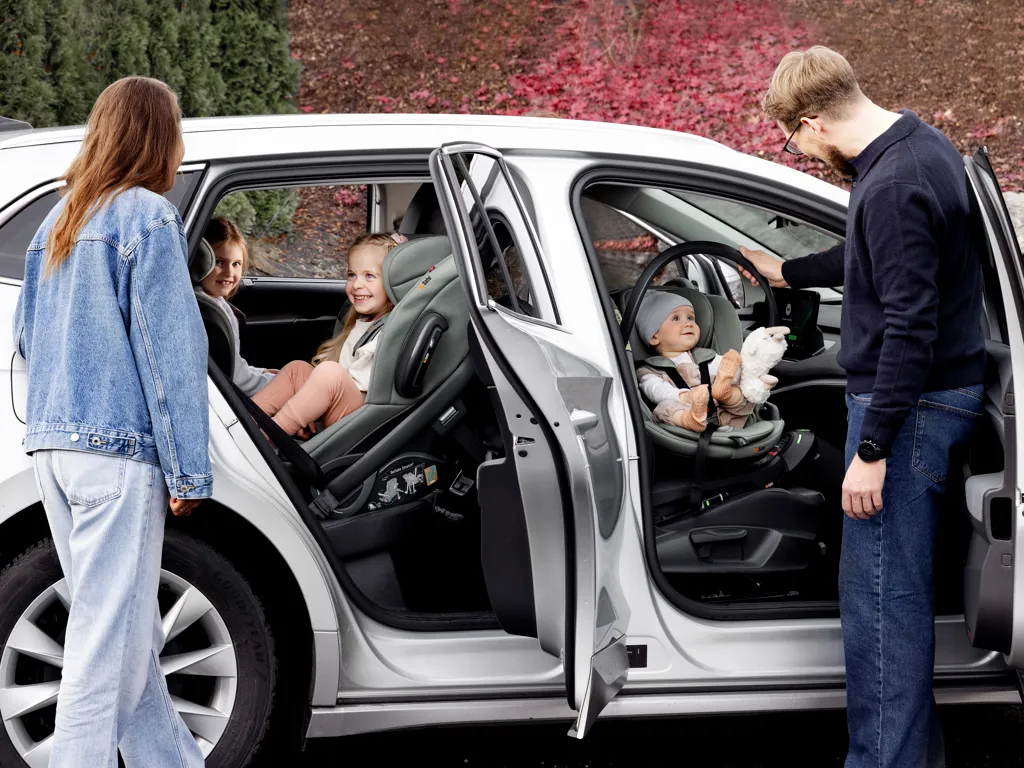
If your child is in a rear-facing seat — particularly one of the larger, higher-weight extended rear-facing (ERF) seats — the poncho approach is especially straightforward. Because rear-facing seats face away from the direction of travel, the poncho simply falls behind your child's back when they're seated, keeping them cosy without interfering with the harness at all.
Many of the seats we recommend at Saunders & Smalls, including seats that have passed the rigorous Swedish Plus Test, rely on a snug, correctly fitted harness to perform at their best. Using a car seat poncho rather than a bulky coat helps ensure you're getting the full benefit of that safety engineering, every single journey. If you're weighing up which ERF seat to go for, our Axkid Minikid 4 guide is a useful place to start — it covers how the harness system works and what makes it stand out.
A note on safety standards: The Swedish Plus Test is an additional voluntary assessment that some manufacturers pursue for their seats. For the most accurate and up-to-date information on which seats carry this accreditation and what it means in practice, we'd recommend checking directly with the manufacturer or speaking to a specialist retailer. You can read more in our guide to rear-facing car seat safety.
If you're not yet sure which extended rear-facing seat is right for your child and your car, our rear-facing car seat collection is a good place to start — every seat we stock is one we'd put our own children in.
Getting the Harness Right: It's Not Just About the Coat
A car seat poncho solves the coat problem — but it's worth taking a step back and thinking about harness fit more broadly. Even without a coat in the picture, harnesses can be incorrectly adjusted, positioned too high or too low, or routed incorrectly through the seat's guides. It's also worth thinking carefully about where you position your rear-facing car seat in the car, as placement can affect both safety and how easily you can access the harness for a proper fit.
If you're not completely confident your child's harness is fitted correctly — or if you've recently moved them into a new seat — it's worth getting a professional check.
Our Smalls Install Plus service is designed exactly for this. You book an appointment with us, bring your car and your seat, and we'll go through everything: installation, harness routing, harness height, and fit — and answer any questions you have along the way. We're based in Wincanton, Somerset, and appointments need to be booked in advance.
If you're not local to Somerset, we're still happy to help. Get in touch and we can point you towards specialist fitters in your area, or answer questions remotely.
The Bottom Line
The car seat poncho is one of those small changes that makes a genuinely meaningful difference to how safely your child travels every day. It's not about being precious or over-cautious — it's about making sure the harness that's doing the hard work in a crash can actually do its job.
To recap:
- Never use a bulky coat under a car seat harness — the compression in a collision creates dangerous harness slack
- A car seat poncho worn over the buckled harness keeps your child warm without affecting fit
- Look for ponchos with harness openings, good warmth-to-bulk ratio, and easy-on design
- If your child is in an extended rear-facing seat, ponchos work particularly well — our Axkid Movekid review is worth a read if you're considering a seat in this category
- If you're unsure about harness fit, book a Smalls Install Plus appointment
Keeping children safe in cars isn't complicated — but it does require a few informed choices. This is one of the easiest ones you can make.